
Getting You Back to Life Sooner
Precision-guided care with less downtime
Our Goal
As Interventional Radiologists at EFW, we work with you to come up with a treatment plan tailored to your symptoms and goals.
Our minimally invasive interventions are image-guided, performed through a small skin incision and patients are typically discharged same-day.
Your Symptoms
Our interventional physicians will meet with you to discuss your symptoms and come up with a treatment plan that’s right for you.
Treatment
We use image guidance to perform state of the art minimally invasive procedures. These procedures are proven effective. Patients recover quickly and get back to their normal life.
Follow-Up
After the procedure our team will follow-up with you to ensure your recovery is going as expected, concerns are addressed and questions are answered.
Procedures/Conditions
Browse our interventional radiology procedures and areas of care.
Geniculate Artery Embolization
Geniculate artery embolization is a surgical alternative for knee pain. It is done by using small tubes called catheters to block the blood supply to the knee joint to decrease inflammation. Patients are discharged same day and typically begin to feel relief in 2-3 weeks.
Kyphoplasty/Sacroplasty
Kyphoplasty is an image guided procedure performed for treatment of symptomatic compression fractures. The procedure is done by using x-rays to guide small rods into your back and deliver cement to stabilize the fracture. Sacroplasty is a related procedure done for sacral fractures. Patients are discharged same day and begin to feel better in 1-2 weeks.
Nerve Blocks
Nerve blocks can be performed for chronic pain affecting a certain area of the body. The Radiologist will discuss your symptoms with you and decide the best treatment/injection. Most nerve blocks only take a few minutes and patients are discharged afterwards.
Pelvic Congestion
Pelvic congestion is a condition in which women experience chronic pelvic pain which worsens during the day with standing or sometimes after intercourse. This is due to incompetent veins which are no longer functioning normally. Treatment is performed as a day procedure in which the abnormal veins are blocked using small tubes called catheters.
Prostate Artery Embolization
As men age their prostate enlarges which can lead to difficulty with urination. Instead of surgery or medication, interventional radiologists can block the blood supply to the prostate causing it to shrink and improving symptoms. Patients are discharged same day and provided medications to help recover from the procedure.
Uterine Fibroid Embolization
Uterine fibroids can cause heavy, painful periods as well as other issues such as bloating or constipation. Uterine fibroid embolization is an alternative to surgery which blocks the blood supply to the fibroids using small tubes called catheters. After a single night stay in hospital most patients are discharged and notice improved symptoms in a few weeks.
Venous Compression
Leg swelling can be the result of venous compression. Most commonly, it is the left leg which swells due to venous compression from the adjacent artery. Correction requires stenting which is a fast acting durable treatment done as a day procedure.
Venous Insufficiency (Superficial)
Superficial veins can become dilated for a number of reasons such as incompetent valves or pregnancy. They may be uncomfortable, impact day to day activities or be cosmetically unappealing. Over a series of short treatments the veins can be treated and return to normal caliber.
Cryoablation
Cryoablation is a newer technology used to freeze soft tissue. This technology can be applied to tumors such as desmoid tumors and other soft tissue lesions to shrink them or control symptoms. Nerves can also be treated to create a long lasting but not permanent nerve injury. Cryoablation is typically done with heavy sedation or general anesthesia as a day procedure.
Other Interventional Services
Performed in hospital and can be arranged by contacting IR on call or submitting a requisition.
- Aneurysm treatment
- Stenting
- Hemodialysis
- Fistula maintenance
- Peritoneal dialysis catheter insertion and repositioning
- Wide range of indications typically related to bleeding in setting of trauma or malignancy
- Gastrostomy, gastrojejunostomy catheters
- Biliary drains and stents
- Ablation of liver tumors
- TIPS
- Nephrostomy and ureteric stents
- Suprapubic catheters
- Central lines and ports
- IVC filter placement/removal
- Stenting
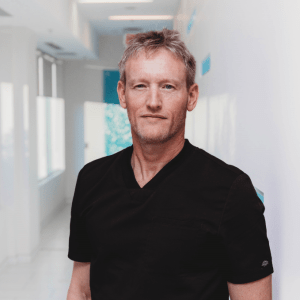
Our Interventional Team
Dr. Cori Caughlin
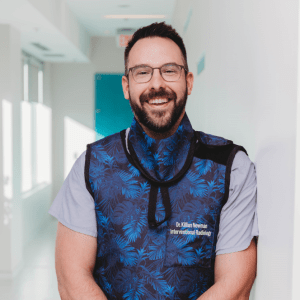
MD, FRCSCDr. Killian Newman
MD, FRCPCDr. Stefan Przybojewski
MBChB, MMed Rad D, FCR Diag(SA), Dip Pec(SA)Dr. Christopher Wright
MD, FRCPCDr. David Sadler
MD, FRCS, FRCRDr. Eric Herget
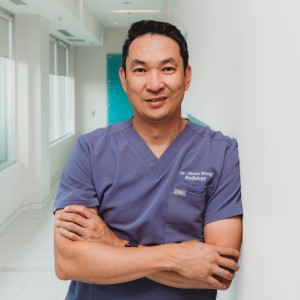
MD, FRCPCDr. Jason Wong
MD, FRCPCDr. John Larrigan
MD, FRCPC




FAQs
Interventional Radiology
Who are interventional radiologists?
Interventional radiologists are a type of doctor who specializes in using image guidance such as x-ray or ultrasound to perform a procedure. Sometimes these procedures are alternatives to traditional surgeries or unique to interventional radiology.
They have completed medical school, residency and additional years of training to become interventional radiologists. They are comfortable working in a variety of body systems and treating both acute and chronic disorders.
How do interventional radiology procedures differ from standard surgery?
Whereas surgery often needs to expose the area of concern by performing an incision, interventional radiologists often access the same organ or body system through a tiny incision and use your body’s normal structures as a pathway to perform the necessary treatment.
If an interventional radiology procedure is right for you, this could mean a quicker recovery.
What is the expected recovery?
Depending on the procedure, you may have a week or two of soreness that should slowly improve. This typically resolves with conservative management and over the counter pain medications. The small incision used for the procedure typically heals in a few days.
Is it painful?
During the procedure, we use local freezing (same as the dentist) and procedural or conscious sedation (same as colonoscopies). Typically this makes our procedures quite tolerable even if lasting up to 4 hours.
How do I get referred?
Talk to your doctor or nurse practitioner about sending in a referral to Interventional Radiology at Foothills Medical Centre. This can be done through Connect Care, email ([email protected]) or fax (403-592-4762).
Lower extremity superficial vein treatment referrals can be made to the Dermapure Wildwood.
Call our Booking Team!
Central Booking
Mon - Fri 7:30am - 5:00pm Sat 8:00am - 4:00pm - (403) 541-1200
- (403) 210-8377
Maternal Fetal Medicine
Mon - Fri 8:00am - 4:30pm - (403) 289-9269
- (403) 210-8381
Pain Management
Mon - Fri 8:00am - 4:30pm - (403) 244-3700
- (403) 210-8382
MRI
Mon - Fri 8:00am - 4:30pm - (403) 244-3700
- (403) 210-8391
Patient Records
- (403) 717-1816
- (403) 210-9977
Corporate Office
Request an Appointment
Request an Appointment
EFW Radiology (“EFW”) is committed to maintaining the confidentiality and privacy of your personal health information. We collect, use and disclose information in compliance with the Health Information Act of Alberta, and Alberta’s Personal Information Protection Act.
If you have any questions regarding EFW’s privacy policies or practices please contact our Privacy Officer. If the matter is not resolved to your satisfaction by us, you may contact The Office of the Information and Privacy Commissioner.